
Adjusted R-Squared: Why, When, and How to Use It
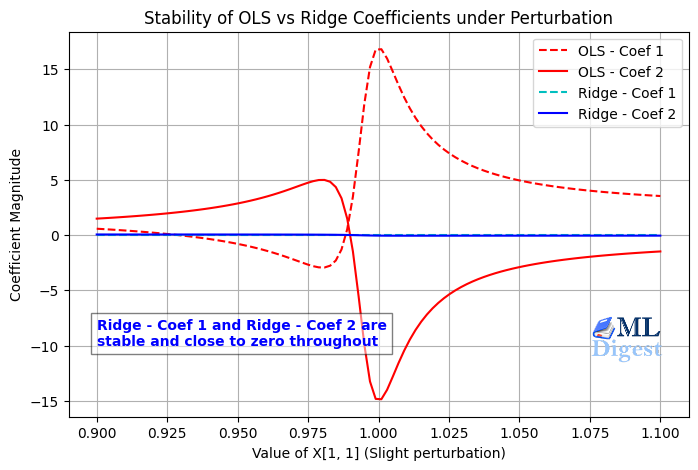
Adjusted R-squared is one of those metrics that shows up early in regression, but it often feels like a small […]
Adjusted R-Squared: Why, When, and How to Use It Read More »
Adjusted R-squared is one of those metrics that shows up early in regression, but it often feels like a small […]
Adjusted R-Squared: Why, When, and How to Use It Read More »
DeepSeek V3.2 is one of the open-weight models that consistently competes with frontier proprietary systems (for example, GPT‑5‑class and Gemini
DeepSeek V3.2: Architecture, Training, and Practical Capabilities Read More »
Imagine trying to understand a person’s life story just by looking at their credit card statements. You would see transactions—purchases,
What Are Knowledge Graphs? A Comprehensive Guide to Connected Data Read More »
Imagine you are reading a mystery novel. The clue you find on page 10 is crucial for understanding the twist
ALiBi: Attention with Linear Biases Read More »
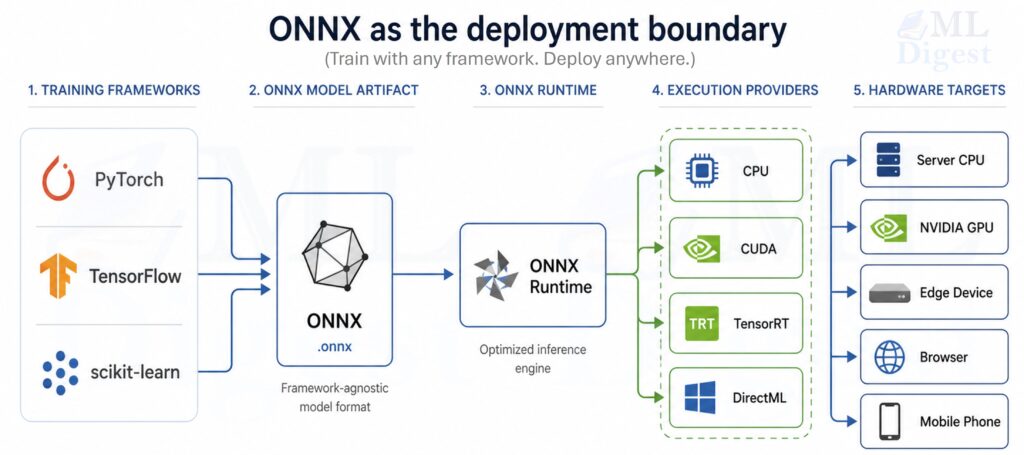
Imagine you have just built a high-performance race car engine (your Large Language Model). It is powerful, loud, and capable
LLM Deployment: A Strategic Guide from Cloud to Edge Read More »
Rotary Positional Embeddings represent a shift from viewing position as a static label to viewing it as a geometric relationship. By treating tokens as vectors rotating in high-dimensional space, we allow neural networks to understand that “King” is to “Queen” not just by their semantic meaning, but by their relative placement in the text.
RoPE Made Easy: Understanding Rotary Positional Embeddings Step by Step Read More »
In this article, we will explore two of the most popular, unsupervised algorithms for this task: RAKE (Rapid Automatic Keyword Extraction) and YAKE (Yet Another Keyword Extractor). We will start with intuitive explanations, then move into mathematical details, and finally look at practical Python implementations and best practices.
RAKE vs. YAKE: Which Keyword Extractor Should You Use? Read More »
Designing an AI system often feels like choosing how to travel from Point A to Point B. The destination is fixed (your business outcome), but you can walk, drive, or fly to get there. This article is a practical compass to help you decide when to use rules, traditional ML, or Generative AI – and how to justify that choice.
Picking the Right AI Approach: Choosing Rules, ML, and GenAI Read More »
For Large Language Models (LLMs), inference speed and efficiency are paramount. One of the most critical optimizations for speeding up text generation is KV-Caching (Key-Value Caching).
KV Caching Made Simple: The Key To Efficient LLM Inference Read More »
Introduction: The Quest to Understand Language Imagine a machine that could read, understand, and write text just like a human.
How Language Model Architectures Have Evolved Over Time Read More »
Think of a bookshelf versus a long hallway: absolute positional embeddings (APE) assign each token a fixed “slot” on the shelf, while relative positional embeddings (RPE) care only about the distance between tokens — like how far two people stand in a hallway. This article first builds intuition with simple analogies and visual descriptions, then dives into the math: deriving sinusoidal APE, showing how sin–cos interactions yield purely relative terms, and explaining how RPE is injected into attention (including T5-style relative bias). Practical PyTorch examples are provided so the reader can implement APE and RPE, understand their trade‑offs (simplicity and extrapolation vs. relational power), and choose the right approach for real-world sequence tasks.
A Guide to Positional Embeddings: Absolute (APE) vs. Relative (RPE) Read More »
Gradient Boosting is more than just another algorithm; it is a fundamental concept that combines several key ideas in machine learning: the wisdom of ensembles, the precision of gradient descent, and the power of iterative improvement. By building a model that learns from its mistakes in a structured, mathematically-grounded way, it has rightfully earned its place as one of the most effective and versatile tools in a data scientist’s toolkit.
Gradient Boosting: Building Powerful Models by Correcting Mistakes Read More »