In ML, predictive and generative models are two fundamental approaches to building ML models. While both have their unique strengths and applications, understanding the key differences between them is crucial for effective model selection and implementation.
Predictive Models: Predicting the Future
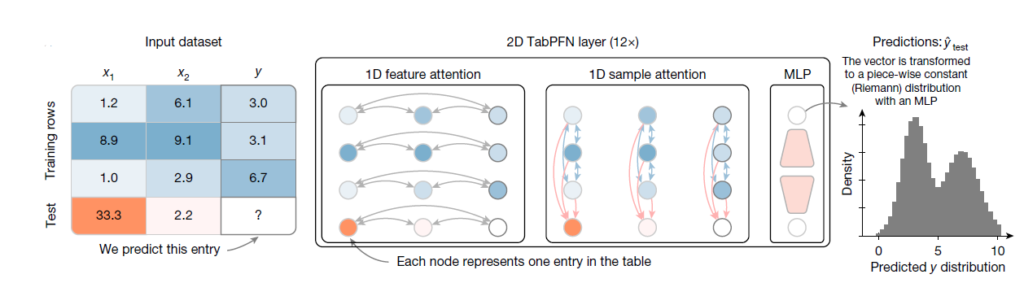
Predictive models are designed to make predictions or classifications based on historical data. They learn patterns and relationships within the data to forecast future outcomes.
- Focus: Predicting future outcomes or classifying existing data.
- Training: Trained on labeled data, where the model learns to associate inputs with corresponding outputs.
- Output: A specific prediction or classification, such as a numerical value, a category, or a probability.
- Examples:
- Regression models: Predict continuous numerical values (e.g., house prices, stock prices).
- Classification models: Predict categorical outcomes (e.g., spam detection, disease diagnosis).
- Time series models: Forecast future values based on historical trends (e.g., weather forecasting, sales forecasting).
Generative Models: Creating New Data
Generative models, on the other hand, aim to generate new data instances that are similar to the training data. They learn the underlying data distribution and can create novel samples.
- Focus: Generating new data instances.
- Training: Trained on unlabeled data, where the model learns to capture the underlying data distribution.
- Output: A new data sample, such as an image, text, or audio.
- Examples:
- Generative Adversarial Networks (GANs): Create realistic images, videos, and other media.
- Variational Autoencoders (VAEs): Generate diverse and creative content.
- Language models: Generate text, translate languages, and write different kinds of creative content.
Key Differences: A Tabular Comparison
| Feature | Predictive Models | Generative Models |
|---|---|---|
| Goal | Predict or classify | Generate new data |
| Training Data | Labeled data | Unlabeled data |
| Output | Prediction or classification | New data instance |
| Applications | Forecasting, classification, anomaly detection | Image generation, text generation, drug discovery |
When to Use Which Model?
- Predictive Models:
- When you have a clear target variable to predict or a specific class to classify.
- When you want to understand the relationships between variables.
- When you need to make accurate forecasts or decisions.
- Generative Models:
- When you want to create new, realistic data.
- When you want to explore the underlying data distribution.
- When you need to generate creative content or art.

Silpa brings 5 years of experience in working on diverse ML projects, specializing in designing end-to-end ML systems tailored for real-time applications. Her background in statistics (Bachelor of Technology) provides a strong foundation for her work in the field. Silpa is also the driving force behind the development of the content you find on this site.
Subscribe to our newsletter!